
The Tampa Museum of Art's galleries and event spaces were built to display permanent and rotating art collections, not to host rows of trade show booths. A program held here works with that reality: fewer, more considered displays that respect the room rather than a dense grid meant to fill square footage.
Venues / Tampa Museum of Art
Tampa Museum of Art Exhibit Planning
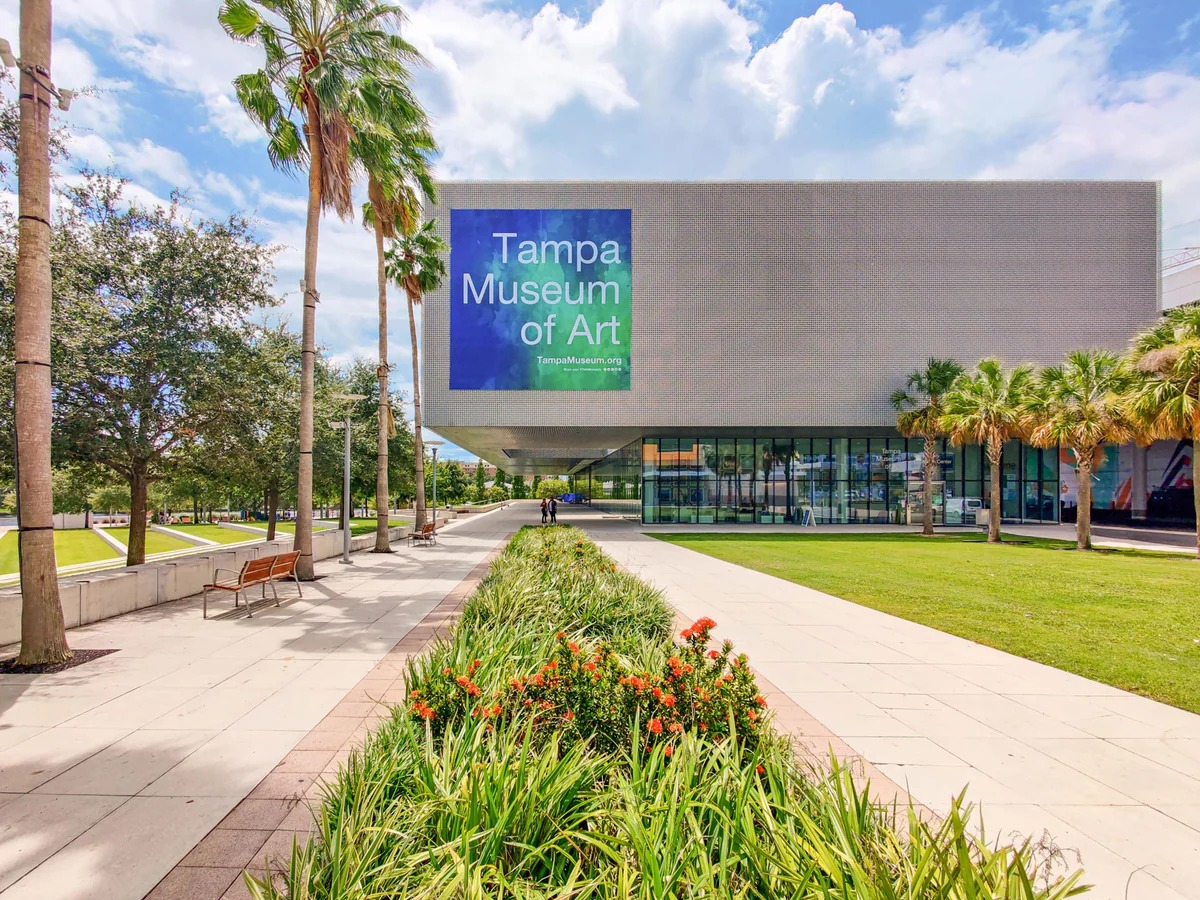
Tampa Museum of Art occupies a glass-and-metal building on the Riverwalk downtown, and its galleries function as event space for receptions and private gatherings rather than a show floor built for trade traffic. Trade Show Exhibit Company of Tampa plans museum programs around collection-care rules, evening reception formats, and displays sized to sit comfortably among gallery walls instead of competing with them.
Venue typeArt museum event space
CityTampa, FL
Planning focusGallery reception and reveal planning
Because the venue is an active art museum, load-in and display placement have to account for collection-care requirements that a convention hall simply does not have: distance from artwork, weight limits on certain floor areas, and restrictions on adhesives, hardware, or anything that could mark a gallery wall.
Trade Show Exhibit Company of Tampa treats these rules as a fixed constraint rather than something to negotiate around on-site, which means confirming placement and materials with the museum's events team well before delivery day rather than discovering a restriction during install.
Unlike a convention center, the museum does not run a high-volume freight operation. Deliveries typically move through a service entrance in smaller volume and slower pace, which limits crate size and the number of pieces that can reasonably move through the building in a single load-in window.
Product reveals, donor cultivation events, and brand activations that want to borrow the museum's cultural credibility tend to work well here. A client positioning a launch as a design or art-adjacent moment gets more value from the setting than a company running a standard information-heavy exhibit program would.
Most programs at the museum run as evening receptions rather than daytime shows, with guests moving between galleries rather than browsing a fixed aisle layout. Staffing and display placement need to support that wandering circulation pattern instead of the more linear flow common on a trade show floor.
Located on the Tampa Riverwalk near the Straz Center and within walking distance of the Tampa Convention Center, the museum works well as an evening add-on to a downtown show, giving a client a distinct setting for a VIP audience without leaving the convention core.
Because the building sits along a heavily used stretch of the Riverwalk, evening guest arrival benefits from clear signage from the street and coordination with the museum's own front-of-house staff, who are used to managing gallery flow but not necessarily a corporate check-in table.
Can a standard trade show booth be built inside the museum?
Generally no. Collection-care rules around adhesives, wall attachment, and placement near artwork mean displays need to be freestanding and confirmed with the museum's events team, rather than built the way a convention-hall booth would be.
What size delivery can move through the museum's service entrance?
Smaller than a convention center dock supports. There is no high-volume freight operation here, so crate sizing and the number of pieces delivered in one load-in window need to be scoped down accordingly.
How much lead time does the museum need for event approval?
More than a standard hotel or convention venue, since placement plans typically need to be reviewed against the current gallery layout and collection-care policy well ahead of the event date.
Is daytime access available for a corporate event?
It depends on the museum's public hours and exhibition schedule, and most private corporate programs are easier to schedule as evening events after the galleries close to the public.
Can catering equipment be staged inside the gallery spaces?
Generally no, food and beverage staging is typically confined to designated areas away from artwork and gallery finishes, with catering staff briefed on the same collection-care rules that apply to exhibit materials.
How many guests can the museum's event spaces realistically hold?
Capacity varies by which galleries and lobby areas are used for a given event, so guest counts should be confirmed against the museum's own event capacity figures rather than estimated from the building's overall footprint.
Does the museum require its own event insurance or vendor approval?
Most museum venues require approved vendors and event insurance documentation ahead of a private program, so this should be confirmed and arranged with the museum's events team well before the load-in date.
Start the conversation
Brief tampa museum of art with the venue, timing, and support mix already on the table.
That makes it easier to decide what should be custom, what should be rented, how the work should be staged, and who needs to own the next move.
Get in touch